

 Library lessons
Library lessons
Tallinn Libraries invites kindergarten groups, classes and teachers to library lessons.
- Library lesson is an educational and participatory non-formal educational program in the library.
- It lasts about 45 minutes.
- Educational programmes are free of charge for Tallinn educational institutions (except for Youth Culture Ticket classes). For institutions outside of Tallinn applies the library’s price list ↓ (except via Culture backpacks).
| Service | Price |
| On-demand lecture or training (45 min), price coefficient 0,4-1,0 | 80 € / hour |
| Education programme, price coefficient 0,5-1,0 | 80 € / hour |
| Educational programme in the library bus, price coefficient 0,5-1,0 | 100 € / hour |
Topics
How is it linked to the curriculum? We support students’ listening, reading, self-expression and communication skills by integrating literature with other subjects.
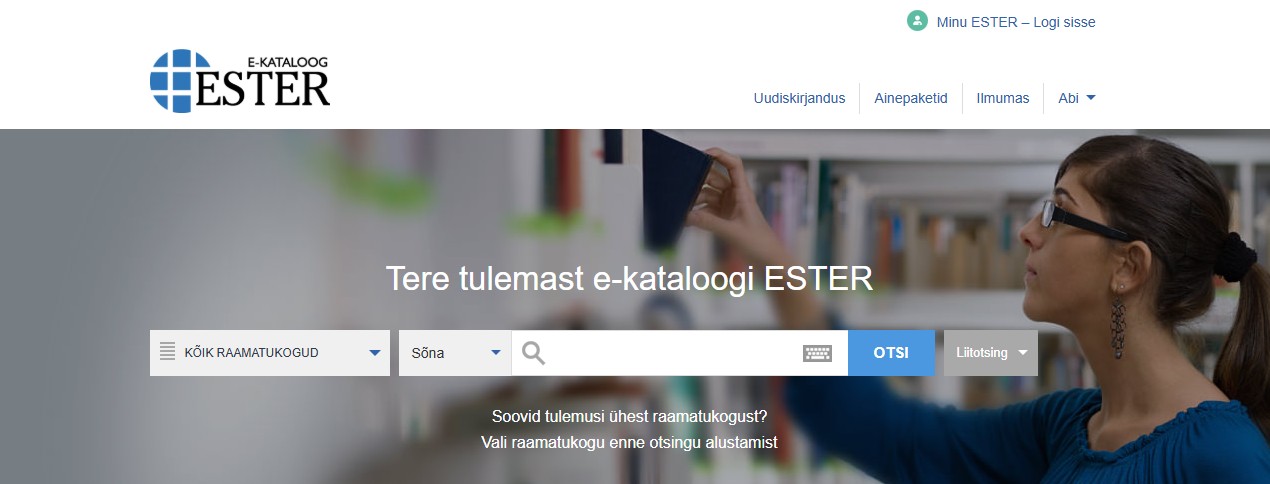
What do we do? In the Tallinn Libraries’ e-catalogue ESTER, we check and make sure that the book(s) you need is (are) available in the desired library. For example, we use the searches SÕNA, PEALKIRI, AUTOR and MÄRKSÕNA. We search and find the books you want on the shelf. We find solutions if the book you need is not in the library you want.
If you wish, we can do two lessons in a row (90 minutes) and also give you an introduction to e-libraries (facilities, logging in, searching, borrowing, etc.). For example, the OverDrive eLibrary offers the possibility to read e-books and e-magazines in foreign languages and to listen to audio books.
For whom? 1. – Year 12 students, teachers.
The language of instruction is Estonian. For pupils with a different home language, the lesson is adapted to the LAK principles, including the language immersion methodology.
Where? In all Tallinn Libraries.
Reservations: contact the library by e-mail or phone, or
How is it linked to the curriculum? We support students’ listening, reading, self-expression and communication skills by integrating literature with other subjects.
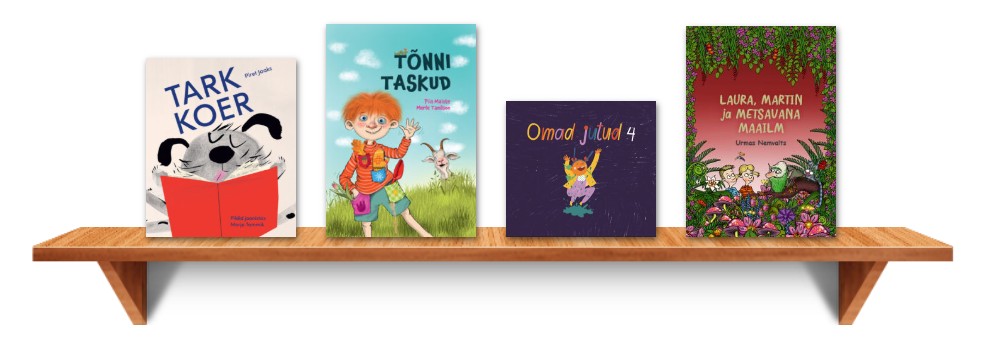
What do we do? Tallinn Libraries will give away a book to all 1st grade students who started school in Tallinn in autumn.
We will hand out the gift books in a playful library lesson, where we will not only introduce the book, but also other useful and exciting things you can find in our library.
Initiated by Tallinn Libraries in 2007, the aim of the book gifting project is to encourage children to read and ensure that they find their way to the library from the very beginning of their schooling.
For whom? Year 1 students, teachers.
The language of instruction is Estonian. For pupils with a different home language, the lesson is adapted to the LAK principles, including the language immersion methodology.
Where? In all Tallinn Libraries.
Reservations: contact the library by e-mail or phone, or
How is it linked to the curriculum? We support students’ listening, reading, self-expression and communication skills by integrating literature with other subjects.
What do we do? We will take a closer look at children’s literature published this century. Get an idea of who today’s children’s authors are. At the meeting, we can focus on, for example, Estonian children’s writers, or on specific genres such as crime fiction for children, according to the teacher’s wishes.
If you wish, we can use the book café method. We will Involve students to express their opinions
For whom? Kindergarten children, 1st-6th grade students, teachers.
The language of instruction is Estonian. For pupils with a different home language, the lesson is adapted to the LAK principles, including the language immersion methodology.
Where? All Tallinn Libraries.
Reservations: contact the library by e-mail or phone, or
How is it linked to the curriculum? We support students’ listening, reading, self-expression and communication skills by integrating literature with other subjects.
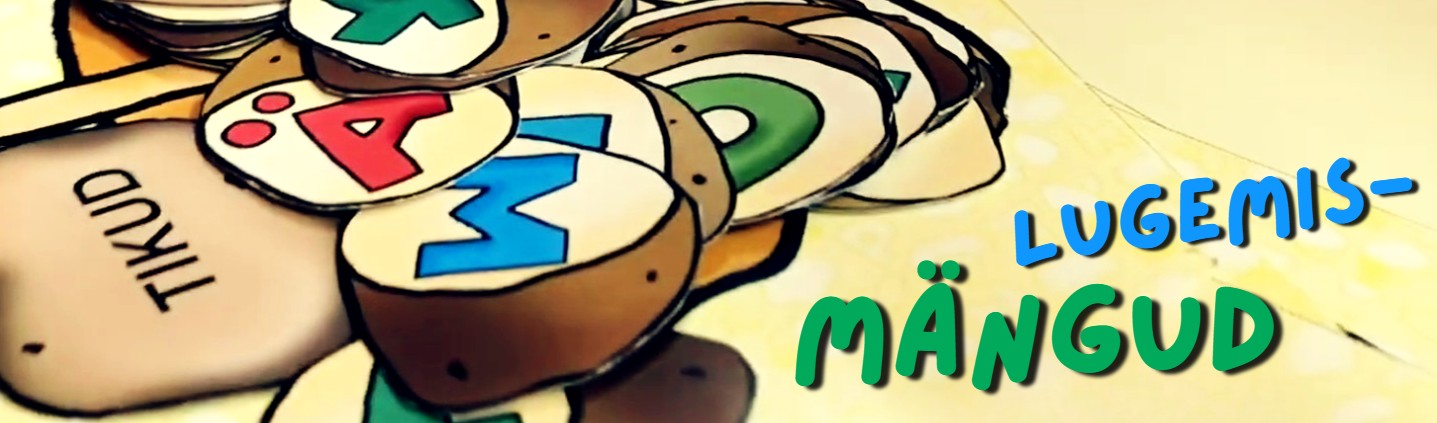
What do we do? Let’s get to know the letters of the Estonian alphabet, and put words together. We play and move. We help to create an interest in reading and to support and develop reading skills.
Reading games compiled by Estonian reading specialists – special educators, teachers, speech therapists – can be borrowed from certain libraries. See availability in the ESTER e-catalogue.
For whom? Kindergarten children, 1st grade.
The language of instruction is Estonian. For pupils with a different home language, the lesson is adapted to the LAK principles, including the language immersion methodology.
Where? All Tallinn Libraries.
Reservations: contact the library by e-mail or phone, or
How is it linked to the curriculum? We support students’ listening, reading, self-expression and communication skills by integrating literature with other subjects.
What do we do? Using the book café and world café method, we will introduce five different literary genres according to the curriculum. At the teacher’s request, we can focus on specific genres (e.g. poetry, short stories). In groups, students will be given tasks related to mathematics, geography, art, music, physical education and literature.
For whom? 1. – Year 12 students, teachers.
The language of instruction is Estonian. For pupils with a different home language, the lesson is adapted to the LAK principles, including the language immersion methodology.
Where? In all Tallinn Libraries.
Reservations: contact the library by e-mail or phone, or
How is it linked to the curriculum? We support students’ listening, reading, self-expression and communication skills by integrating literature with other subjects.
What do we do? We take a closer look at the youth novels published this century. Get an idea of who today’s young adult writers are. At the meeting, we can focus on specific genres, e.g. science fiction for young people, according to the teacher’s wishes.
For whom? 7. – Year 12 students, teachers.
The language of instruction is Estonian. For pupils with a different home language, the lesson is adapted to the LAK principles, including the language immersion methodology.
Where? In all Tallinn Libraries.
Reservations: contact the library by e-mail or phone, or
How is it linked to the curriculum? We support students’ listening, reading, self-expression and communication skills by integrating literature with other subjects.
What do we do?
💡 Grades 1-4: talking about emojis, social media and internet safety
💡 Grades 5-9: talking about the dangers of the online world and how to deal with them.
For whom? 1. – 9th grade students, teachers.
The language of instruction is Estonian. For pupils with a home language other than English, the lesson is adapted to the LAK principles, including the language immersion methodology.
Where? All Tallinn Libraries.
Reservations: contact the library by e-mail or phone, or
Mystery in the library
Tallinn Libraries will prepare a multi-part puzzle, or mystery, according to the teacher’s agreement and the topic of the lesson, which the participants can solve in groups based on their existing knowledge and new information from the textbook(s). The puzzles are related to literature. The mystery can be created for any lesson.
💡Duration 45 minutes
💡Target group: grades 1-12
💡Number of participants in group: min 10, max 40 students.
Curriculum relevance: the mystery is based on the material covered in the lesson chosen by the teacher. We support students’ listening, reading, expression and communication skills by integrating literature with other subjects.
LARP in the library
Tallinn Libraries will prepare and carry out a role play based on literature, or larp. The literary work on which the larp is based can be chosen by the teacher. Up to 40 participants can take part in the larp, offering the possibility of joint activities, e.g. for parallel classes. During the lesson, students can also find out which literary character they most resemble.
💡Duration approx. 1.5 hours
💡Target group: grades 4-12
💡Number of participants in group: min 10, max 40 students
Curriculum relevance: we support students’ listening, reading, self-expression and communication skills by integrating literature with other subjects.
For booking please write to Merle.Tanilsoo@tln.lib.ee, tel 683 0913
How is it linked to the curriculum? We support students’ listening, reading, self-expression and communication skills by integrating literature with other subjects.
What do we do? Introducing our library services and facilities. For example, the Südalinna library has a music room and you can borrow musical instruments, the Kännukuke library has an innovation lab, the Laagna library has a seed room, the Paepealse library has Estonia’s largest comics collection, the Sõle library has a sewing room and the Pelguranna library has a tool room. We also give an insight into the librarian’s most exciting jobs and activities.
For whom? 1. – Year 12 students, teachers.
The language of instruction is Estonian. For pupils with a different home language, the lesson is adapted to the LAK principles, including the language immersion methodology.
Where? All Tallinn Libraries.
Reservations: contact the library by e-mail or phone, or
How is it linked to the curriculum? We support students’ listening, reading, self-expression and communication skills by integrating literature with other subjects.
What do we do? Introducing our library services and facilities. For example, the Südalinna library has a music room and you can borrow musical instruments, the Kännukuke library has an innovation lab, the Laagna library has a seed room, the Paepealse library has Estonia’s largest comics collection, the Sõle library has a sewing room and the Pelguranna library has a tool room. We also give an insight into the librarian’s most exciting jobs and activities.
For whom? 1. – Year 12 students, teachers.
The language of instruction is Estonian. For pupils with a different home language, the lesson is adapted to the LAK principles, including the language immersion methodology.
Where? All Tallinn Libraries.
Reservations: contact the library by e-mail or phone, or
How is it linked to the curriculum? We support students’ listening, reading, self-expression and communication skills by integrating literature with other subjects.
What do we do?A librarian will introduce the best of age-appropriate literature from the “new arrivals” section.
For whom? 1. – Year 12 students, teachers.
The language of instruction is Estonian. For pupils with a home language other than English, the lesson is adapted to the LAK principles, including the language immersion teaching methodology.
Where? All Tallinn Libraries.
Reservations: contact the library by e-mail or phone, or
How is it linked to the curriculum? We support students’ listening, reading, self-expression and communication skills by integrating literature with other subjects.
What do we do? A library lesson on a topic chosen by the teacher. Reading content lessons or Finno-Ugric peoples and culture, etc. A good lesson can take up to 2 weeks to prepare.
For whom? 1. – Year 12 students, teachers.
The language of instruction is Estonian. For pupils with a home language other than English, the lesson is adapted to the LAK principles, including the language immersion teaching methodology.
Where? All Tallinn Libraries.
Reservations: contact the library by e-mail or phone, or